
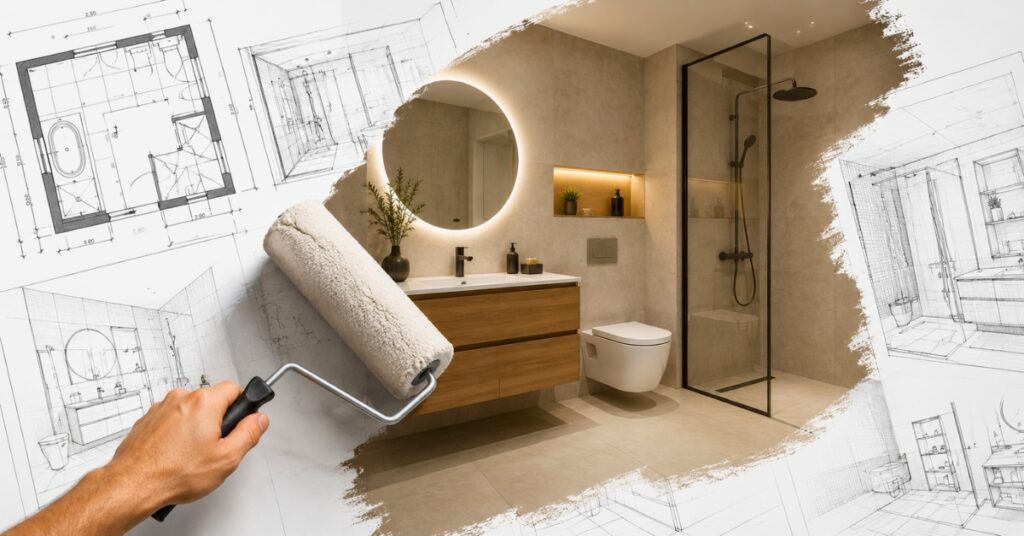
If your bathroom needs more than a new coat of paint and a replacement shower, you may be considering a complete bathroom renovation. But what does “complete” actually mean, and how much of the room is typically replaced?
A complete bathroom renovation generally means stripping the existing bathroom back and rebuilding it rather than simply replacing individual fixtures. Depending on the condition of the room and what you want to achieve, this can involve everything from plumbing and electrics to plastering, tiling, flooring and fitting the new bathroom suite.
At The Home Improvement Co., we manage bathroom renovations from start to finish, bringing the different elements of the project together to create a finished bathroom that’s practical, well designed and built to last.
What Is a Complete Bathroom Renovation?
There is no single definition because every bathroom and every project is different. However, a complete renovation usually involves replacing most or all of the existing bathroom rather than making cosmetic improvements.
The work might include:
-
Removing the existing bathroom suite
-
Stripping old tiles and flooring
-
Removing unwanted fixtures and fittings
-
Altering or renewing plumbing
-
Electrical work
-
Repairing and preparing walls and floors
-
Plastering
-
Waterproofing shower areas
-
Installing a new bath or shower
-
Fitting a new toilet and basin
-
Installing bathroom furniture and storage
-
Wall and floor tiling
-
New flooring
-
Lighting and ventilation
-
Decorating and finishing
It essentially gives you the opportunity to start again with the room, addressing practical problems at the same time as updating its appearance.
The First Stage: Removing the Existing Bathroom
Before the new bathroom can go in, the old one usually needs to come out.
The bath, shower, basin, toilet and furniture are removed, along with old tiles, flooring and other finishes where necessary.
This is also the point at which problems that weren’t visible beforehand can sometimes be discovered. Water damage, deteriorated plaster, damaged flooring or old plumbing may only become apparent once everything has been stripped away.
Although discovering additional work isn’t ideal, a full renovation gives you the chance to deal with these problems properly before the new bathroom is installed.
Plumbing and Changing the Layout
If you’re happy with the existing bathroom layout, keeping the main fixtures in roughly the same positions can make the renovation simpler.
However, a complete bathroom renovation also provides an opportunity to rethink a layout that has never worked particularly well.
You might decide to replace a bath with a large walk-in shower, move the basin to create more usable space or reposition the toilet. Plumbing can be altered to accommodate the new arrangement where practical.
This stage needs careful planning. Moving bathroom fixtures can affect drainage and pipework, so it’s important to establish what’s possible before committing to a particular design.
Electrical Work
Modern bathrooms often need considerably more electrical planning than older ones.
You may want new ceiling lights, illuminated mirrors, electric underfloor heating, a heated towel rail, shaver sockets or improved extractor fans.
Bathroom electrical work is subject to specific safety requirements because electricity and water are an obvious risk when combined. Any required electrical alterations should therefore be considered as part of the overall renovation rather than added as an afterthought.
Planning lighting early also means cables and fittings can be positioned before walls and ceilings are finished.
Preparing the Walls and Floor
One of the less visible parts of a bathroom renovation is also one of the most important.
Once the old bathroom has been removed, the walls and floors need to be checked and prepared for the new finishes.
This might involve repairing damaged plaster, levelling walls, replacing unsuitable boards or preparing the floor for tiles or another covering.
Shower and wet areas also need appropriate waterproofing. Getting this preparation right helps prevent leaks and provides a stable surface for the finishes that will be visible once the bathroom is complete.
Installing the New Bathroom Suite
Once the underlying work is complete, the room begins to look like a bathroom again.
Depending on your design, installation might include a bath, shower enclosure, walk-in shower, toilet, basin, vanity unit and fitted bathroom furniture.
This is where accurate measurements and good planning become particularly important. Even a reasonably large bathroom can feel cramped if fixtures aren’t positioned carefully.
In smaller rooms, compact sanitaryware, wall-mounted furniture and clever storage can help maximise the available space.
Tiling and Flooring
Tiles have a major impact on the finished appearance of a bathroom, but there are practical decisions to make too.
You don’t necessarily need to tile every wall from floor to ceiling. Some bathrooms benefit from fully tiled walls, while others combine tiles in wet areas with painted walls elsewhere.
The flooring needs to be suitable for a room that’s regularly exposed to moisture and splashes. Porcelain and ceramic tiles are popular choices, while bathroom-specific vinyl and luxury vinyl flooring can provide alternatives.
Slip resistance, durability and ease of cleaning should all be considered alongside colour and design.
Ventilation
If you’re investing in a complete bathroom renovation, it’s worth making sure the ventilation is up to the job.
Bathrooms generate a considerable amount of moisture. Without adequate ventilation, condensation can eventually lead to mould, peeling paint, damaged finishes and other problems.
An effective extractor fan helps remove humid air and protect the room you’ve just invested in.
If condensation has been a persistent problem in your existing bathroom, the renovation is the ideal time to address it.
Finishing Touches
Once the major installation work has been completed, attention turns to the details.
Mirrors, shelving, handles, taps, towel rails and other accessories can all influence the final appearance of the room.
This is also when decorating, sealing and final finishing work is completed.
Small details matter. Neat silicone lines, properly aligned fittings and carefully finished edges can make the difference between a bathroom that simply looks new and one that feels professionally finished.
How Long Does a Complete Bathroom Renovation Take?
The timescale depends on the size of the bathroom and the amount of work involved.
A straightforward replacement using the existing layout will generally be quicker than a renovation involving substantial plumbing changes, electrical work, plastering and extensive tiling.
There may also need to be drying or curing time between different stages of the project.
Before work begins, your bathroom fitter should be able to explain the expected schedule and the order in which the different trades will complete their work.
How Much Does a Complete Bathroom Renovation Cost?
There isn’t a standard price for a complete bathroom because the scope can vary enormously.
The size of the room, condition of the existing bathroom, amount of plumbing and electrical work, choice of suite, tiles, flooring and furniture will all affect the final cost.
Changing the layout will generally involve more work than installing new fixtures in their existing positions, while your choice of materials and fittings can move the overall budget considerably in either direction.
For this reason, it’s important to compare what’s actually included in quotations rather than looking only at the final figure.
A comprehensive quote should make it clear which parts of the renovation are included and highlight anything you’ll need to arrange or purchase separately.
Do You Need a Complete Bathroom Renovation?
Not every bathroom needs to be completely stripped out.
If the layout works well and the plumbing, walls and flooring are in good condition, replacing selected fixtures or updating the decoration may be enough.
A complete renovation makes more sense when the bathroom is dated, several elements need replacing, there are underlying problems or you want to substantially change the layout and design.
It can also be more efficient to complete all the work at once rather than replacing different parts of the bathroom individually over several years.
Planning a Complete Bathroom Renovation?
A complete bathroom renovation involves a lot of moving parts, which is why having one team manage the project can make the process considerably easier.
The Home Improvement Co. can take care of your bathroom renovation from the initial planning and removal of your existing bathroom through to installation and those all-important finishing touches.
If you’re thinking about renovating your bathroom, get in touch with The Home Improvement Co. to discuss your ideas and find out what’s possible in your space.
Ready to transform your bathroom?
Contact us today to schedule a survey or to learn more about our bathroom renovation services.